A nuclear robot may spend its day checking a pipe, reading radiation, or moving waste that people shouldn't approach. The machine keeps workers farther from the hazard while cameras, sensors, and remote controls let them do the work from a safer room. The hard part is making the robot work after radiation, heat, dust, and poor visibility have taken their toll.
Quick read
- Remote manipulators keep people away from contaminated rooms and damaged equipment.
- Cameras and radiation sensors turn hidden conditions into information operators can use.
- Most systems still need a person for judgment, recovery, and repair planning.
Where these robots work
Nuclear robots work in places where a person could receive too much radiation or spread contamination by entering. Typical jobs include checking reactor buildings, inspecting fuel-handling areas, measuring waste containers, and looking inside damaged structures.
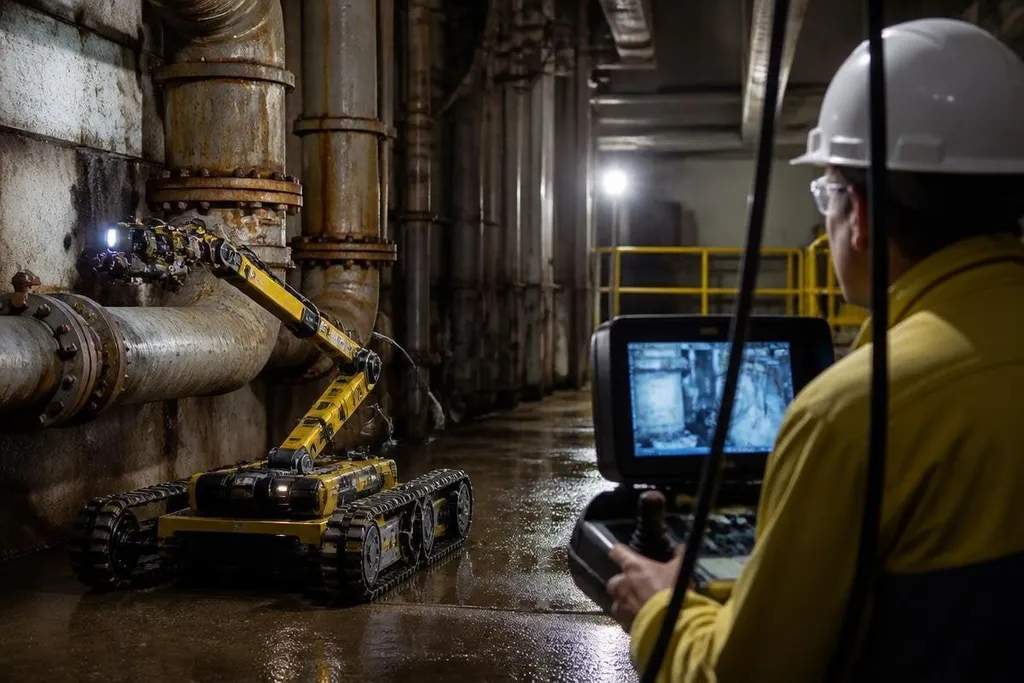
Some machines roll on tracks or wheels. Others use a small arm with a camera, radiation detector, gripper, or cutting tool. The tool matters because inspection and cleanup call for different movements. A camera can check a surface from a distance, while a manipulator may need to turn a valve or pick up an object.
An inspection robot may also carry a gamma camera. This sensor shows where radiation is coming from, giving the operator more than a normal video feed. A clear image of a room tells you what is there; a radiation map helps show where you can safely work next.
How the machines protect people
The first layer of protection is distance. Operators can control a robot from outside the contaminated area, often through a shielded control room. The robot sends back video, sensor readings, and machine status, so the operator can choose the next movement without entering the room.
Teleoperation means a person controls the robot while watching its cameras. This works well when the task changes between attempts, such as finding a broken cable or moving an object that has shifted. Some robots can handle routine movement on their own, but a person still sets the task and checks the result.
Radiation creates a second problem: it can damage cameras, memory, processors, and motor controls. Nuclear robots may use radiation-tolerant parts, shielding, replaceable cameras, or a design that keeps sensitive electronics away from the work tool.
Those choices add weight and cost, yet a robot that fails inside a contaminated room can create another recovery job.
A nuclear robot’s result needs its task, radiation level, site, test date, and recovery method beside the claim. Reports at Robot24 can keep those facts together before the next section asks which steps still need people.
What still needs people
Reaching a dangerous room doesn't remove the need for planning. Operators need a route into the area, a way to recover the machine, and a plan for cleaning or storing it afterward. Batteries, radio links, cables, and grippers can all limit the job.
Poor visibility can slow the work. Dust may cover a lens, water can block a sensor, and narrow spaces can trap a tracked vehicle. The machine may have enough force to move a heavy object but too little control to place it safely. That gap matters during valve work, waste handling, and equipment inspection.
The operator's view can be another limit. Cameras flatten distance, so a hand may look close to a pipe when it is still several centimeters away. Force feedback helps, but it doesn't give the same sense of contact as a gloved hand. I'd choose a proven remote system over a more independent robot when a mistake could leave equipment inside the plant.
A practical check before use
A nuclear facility team can check these points before choosing a robot:
- Radiation rating: Check how long the cameras, control boards, cables, and batteries can work in the planned area.
- Recovery plan: Confirm how staff will retrieve the robot after a motor fault, lost link, or blocked route.
- Tool fit: Match the arm, gripper, detector, or cutter to the task instead of treating the base robot as the whole system.
- Control link: Test video delay, signal loss behavior, and cable routing inside the actual work area.
- Decontamination: Find out which surfaces can be washed, covered, removed, or stored as radioactive waste.
The next useful step is not a more dramatic demo. It is a repeatable test in a mock room that matches the real route, radiation conditions, tools, and recovery plan. The machine earns its place when it finishes that test and comes back out.